

Tesla Universal Wall Connector Review!
- Last Updated
- October 22, 2024
Tesla Universal Wall Connector

- Works with circuits rated from 20 to 60A
- Up to 11.5 kW of power (44 miles per hour)
- Best for Tesla Vehicles
- Available with both J1772 and NACS (Tesla) connectors.
What We'll Cover In Our Tesla Universal Wall Connector Review
In our comprehensive review, we’ll dive into everything you need to know about the Tesla Universal Wall Connector, one of the most versatile and popular home EV chargers available.
We’ll explore its compatibility with all electric vehicles, not just Teslas, and how its 11.5 kW power output ensures quick and efficient charging. We’ll also talk about the easy installation process, and how the built-in Wi-Fi connectivity lets you track and manage charging sessions from your phone.
Whether you’re a new, or current Tesla owner or drive a different EV, this review will help you decide if the Tesla Universal Wall Connector is the right fit for your home charging setup.
8.5/10
Performance 9/10
The Tesla Wall Charger provides a strong power output of up to 48 amps, enabling rapid charging for Tesla vehicles. Its compatibility with Tesla’s proprietary connector ensures optimal charging efficiency, making it a top performer for Tesla owners.
Smart Features 7/10
While the charger is designed for seamless integration with Tesla vehicles and includes basic monitoring capabilities through the Tesla app, it lacks more advanced smart features compared to some competitors, such as detailed energy tracking and customizable charging schedules.
Durability & Build 9/10
The Tesla Wall Charger boasts a sleek, weather-resistant design suitable for both indoor and outdoor installations. Its robust construction reflects Tesla’s commitment to quality and durability, ensuring it can withstand various environmental conditions.
Value 8/10
The price point is relatively competitive within the EV charger market, especially considering its specialized design for Tesla vehicles. However, it may not offer as much versatility for non-Tesla users, which could limit its appeal for multi-vehicle households.
Table of Contents
Who Are Tesla?
At this point, we’ve all heard of Elon Musk, but Tesla had humble beginnings long before he became the face of the company. Tesla, Inc. was founded in 2003 by engineers Martin Eberhard and Marc Tarpenning, with the goal of proving that electric cars could be just as good – if not better than gas powered vehicles. Musk joined soon after and helped propel Tesla into the spotlight with ambitious goals for electric mobility and clean energy.
Today, Tesla is known for much more than just cars. From their sleek sedans like the Model S to popular EVs like the Model 3 and Model Y, they’ve redefined what electric vehicles can do. But the company’s reach extends beyond just cars. Tesla is also focused on sustainable energy solutions, offering products like solar panels, solar roofs, and the Powerwall battery system for home energy storage. Their mission? To accelerate the world’s transition to sustainable energy.
Tesla Universal Wall Connector Dimensions
- Height: 13.6 inches (34.5 cm)
- Width: 6.1 inches (11.5 cm)
- Depth: 4.3 inches (11.0 cm)
Tesla Universal Wall Connector Features
The Tesla Universal Wall Connector is designed with convenience, compatibility, and performance in mind, making it a versatile charging solution for all electric vehicle owners.
Universal Compatibility: Unlike previous Tesla chargers, this model works with any electric vehicle, not just Tesla cars, thanks to the inclusion of both the Tesla connector and a J1772 adapter. This means you can future-proof your charging setup, regardless of what car you drive now or might purchase down the road.
High-Power Charging: The Wall Connector delivers up to 11.5 kW of power, ensuring fast charging times for a wide range of EVs. Whether you’re plugging in overnight or for a quick top-up, it gets the job done efficiently.
Wi-Fi Connectivity: Built-in Wi-Fi allows for seamless integration with the Tesla app, where you can monitor charging progress, track energy usage, and install software updates. While some users have reported occasional Wi-Fi issues, we found the connection stable throughout our testing, with no noticeable interruptions in functionality.
Installation Flexibility: The Tesla Universal Wall Connector is designed to be hardwired for a more permanent setup, but the installation process is straightforward. Most users can install it with the help of an electrician, and Tesla provides comprehensive guidance to ensure a smooth process.
Durable and Weather-Resistant Design: Designed for both indoor and outdoor use, the Wall Connector features a durable casing that withstands a range of weather conditions. It also comes with a 24-foot cable, offering plenty of reach for different vehicle parking positions.
A unique advantage of the Tesla Universal Wall Connector is its ability to provide a seamless, integrated charging experience for both Tesla and non-Tesla EVs. As more automakers adopt Tesla’s NACS standard, this charger is a future-proof investment for electric vehicle owners looking for versatility and high-performance charging at home.
Tesla Wall Connector Pros
- High Charging Speed:
Delivers up to 11.5 kW of power, ensuring fast and efficient charging for both Tesla and non-Tesla EVs. - Universal Compatibility:
Comes with both Tesla’s proprietary connector and a J1772 adapter, making it compatible with all electric vehicles. - Durable and Weather-Resistant Design:
Built for indoor and outdoor use, the Wall Connector is weatherproof and designed to withstand various environmental conditions. - Wi-Fi Connectivity & Smart Features:
Connects to Wi-Fi for seamless integration with the Tesla app, allowing you to monitor charging sessions, track energy usage, and receive software updates. - Long Cable Length:
Equipped with a 24-foot charging cable, offering flexibility in how you position your vehicle in relation to the charger. - Streamlined Installation:
Though hardwired, the installation process is relatively straightforward, and Tesla provides clear instructions for setup with an electrician. - Future-Proof Design:
As more automakers adopt Tesla’s NACS standard, the Universal Wall Connector ensures you’re prepared for future EVs. - Safety Features:
Includes built-in safety measures like over-current protection, ground fault protection, and thermal sensing to ensure safe and reliable charging.
Tesla Wall Connector Cons
- Hardwired Installation Only:
The Tesla Universal Wall Connector must be hardwired, which may require a licensed electrician for installation, potentially increasing the overall cost and complexity. - Higher Initial Cost:
Compared to some other EV chargers on the market, the upfront price of the Wall Connector may be higher, making it less accessible for budget-conscious consumers. - Limited Portability:
Due to its hardwired nature, the Wall Connector is not easily portable, which means you cannot take it with you if you move or want to use it at a different location. - Potential Wi-Fi Connectivity Issues:
While generally reliable, some users have reported occasional connectivity issues with the Wi-Fi feature, which can impact access to smart features and remote monitoring. - No Plug-In Option:
Unlike some competitors that offer both plug-in and hardwired options, the lack of a plug-in version may limit installation flexibility for some homeowners. - Compatibility with Non-Tesla Models May Require Adapter:
While it comes with a J1772 adapter, some users may find it cumbersome to switch connectors if they frequently switch between Tesla and non-Tesla vehicles. - Limited Charge Customization:
The Wall Connector does not have adjustable amperage settings, which may limit customization based on specific home electrical capacity or user preferences.
Discover the value of your cars options and specification!
- Select from thousands of vehicles and options
- See how each option adds value to your car
- Discover which tech features add a premium
- Spot which options hold their value over time
- Find out if that 'Sport' package pays off later
- Identify high value features others miss
$355 $354 $353 $352 $351 $350
Telsa Wall Connector Quality Level
Materials
The Tesla Wall Connector is made from high-strength plastic and features weatherproofing that contributes to its longevity. This durable construction is designed to withstand various environmental conditions, making it suitable for both indoor and outdoor installations.
IP Rating
- The Tesla Wall Connector comes with an IP66 rating, which means it’s dust-tight and resistant to powerful water jets, ensuring it can handle harsh weather without compromising functionality.
Charging Efficiency
- You’ll get up to 11.5 kW of power, enabling fast charging for a wide range of electric vehicles.
Safety Features
- The Wall Connector includes advanced safety features such as over-current protection, ground fault protection, and thermal sensing. These features protect both the charger and the vehicle during the charging process.
Cable Length
- The 24-foot charging cable provides flexibility, allowing you to position your EV either close to or further away from the charger.
How Does The Tesla Wall Connector Connect?
Hardwired Connection
The Wall Connector must be hardwired to your home’s electrical system, which typically requires the assistance of a licensed electrician. The electrician will connect the Wall Connector to a dedicated circuit breaker in your electrical panel to ensure safe and efficient operation.
Wi-Fi Connectivity
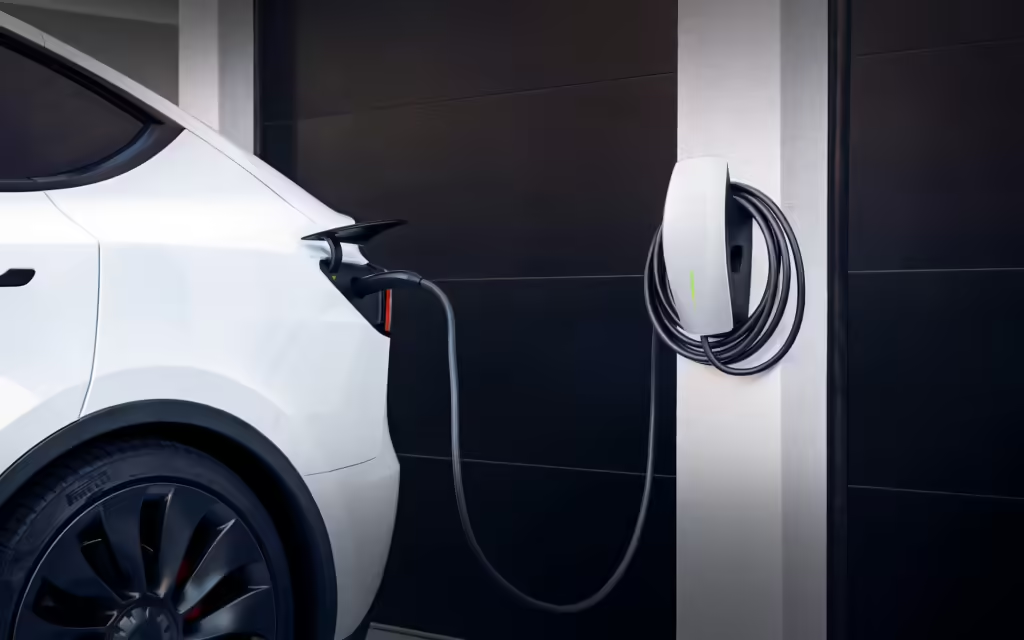
The Tesla Universal Wall Connector features built-in Wi-Fi, allowing it to connect to your home network. This connectivity enhances the user experience by enabling remote access through the Tesla app. Users can monitor their charging sessions, receive notifications about charging status, and manage settings from anywhere, providing greater control over the charging process. While the Wi-Fi feature is generally reliable, some users have reported occasional connectivity issues, but overall, it adds significant convenience for monitoring and managing charging activities.
Smart Features
The Wall Connector’s smart features include real-time charging updates and energy usage tracking, accessible through the Tesla app. Users can view details about charging times, costs, and overall energy consumption, which can help optimize charging habits and reduce electricity bills. Additionally, software updates can be pushed directly to the Wall Connector via Wi-Fi, ensuring that the device remains up-to-date with the latest improvements and features. This integration of smart technology enhances the overall functionality and user experience, making it easier to manage EV charging at home.

Tesla Universal Connector Install Instructions (Hardwired)
Hardwired Instructions
Materials Needed
- Tesla Universal Wall Connector
- Circuit breaker (recommended amperage depending on the installation, typically 50 amps)
- Electrical conduit and wiring (appropriate gauge for your installation)
- Mounting hardware
- Screwdriver and drill
- Safety equipment (gloves, goggles, etc.)
Choose The Location
- Select a suitable location for the Wall Connector, typically in your garage or an outdoor area that provides easy access for charging your EV.
Turn Off Power
- Before beginning any electrical work, turn off the power at the main circuit breaker to prevent electrical shock.
Mount the Wall Connector
- Use the provided mounting bracket to secure the Wall Connector to the wall at the desired height. Ensure it is level and firmly attached.
Run the Wiring
- Use electrical conduit to run the appropriate gauge wiring from the main electrical panel to the Wall Connector location. This wiring should be rated for the amperage you plan to use (typically 6 AWG for a 50-amp circuit).
Connect The Wiring
- At the Wall Connector:
- Open the back cover of the unit to access the wiring terminals.
- Connect the incoming power wires (typically one black for hot, one red for secondary hot if using a 240V setup, one green for ground, and one white for neutral) to the corresponding terminals inside the Wall Connector.
- At the main electrical panel:
- Install a new circuit breaker (50 amps recommended) and connect the wiring to the breaker. Ensure the wires are securely attached and properly insulated.
Secure All Connections
- Double-check all wiring connections for tightness and insulation. Close the back cover of the Wall Connector securely.
Turn on Power
- Restore power at the main circuit breaker and turn on the new circuit breaker for the Wall Connector.
Test The Installation
- Plug in your EV to test the Wall Connector and ensure it is functioning correctly. Monitor the charging status via the Tesla app for confirmation.
Please Check!!!
- Electrical Codes: Ensure the installation complies with local electrical codes and regulations.
- Professional Installation: If you are not experienced with electrical work, it is highly recommended to hire a licensed electrician to perform the installation to ensure safety and proper functionality.
- Voltage and Amperage: Make sure to select the appropriate circuit breaker and wiring based on your specific electrical setup and the charging requirements of your EV.
How Do I Set Up The Tesla App?
1. Download The Tesla App
- Download the Tesla app from the App Store (iOS) or Google Play (Android).
- Make sure your phone is connected to the internet via Wi-Fi or mobile data.
2. Create or Log in to Your Tesla Account
- Open the Tesla app and log in using your Tesla account credentials.
- If you don’t have an account, click on the “Create Account” option and follow the instructions to set one up using the email address associated with your Tesla purchase.
3. Add Your Vehicle
Once logged into the app:
- Your Tesla should automatically appear in your Tesla account if it’s linked with the same email used during the purchase.
- If your car doesn’t show up, make sure you’ve completed the ownership transfer and paperwork. You may need to contact Tesla Support if it’s still not visible, here is a link.
4. Pair The App With Your Car
After your car is visible in the app:
- Bluetooth: Ensure your phone’s Bluetooth is turned on.
- Proximity: Be close to your vehicle, as you will need to pair the app with the car.
- In the app, tap on your vehicle’s name. It may ask for your car key card (or fob) to verify ownership.
5. Enable Mobile Access
To use the Tesla app features, you need to enable Mobile Access from the car’s touch screen:
- Go to the Controls menu on your Tesla’s touchscreen.
- Select Safety & Security.
- Toggle Mobile Access to enable it.
6. Set Up App Features
Once Mobile Access is enabled, you can start using the features:
- Charging: Monitor your car’s charging status, start or stop charging, and set charging limits.
- Lock/Unlock: Lock or unlock your vehicle remotely.
- Climate Control: Turn on the climate control system remotely to precondition the cabin.
- Location: Track your car’s location through GPS.
- Security Settings: Enable or disable features like Sentry Mode, valet mode, and more.
7. Custom Settings and Notifications
- Set up custom notifications for charging, software updates, or when your vehicle reaches a certain charge level.
- Personalize the app for your needs, such as configuring auto-lock features, scheduling charging sessions, and more.
8. Use Phone as a Key (Optional)
- You can enable the Phone as a Key feature to unlock and drive your car without the key card.
- On the car’s touchscreen, go to Locks > Add Key > Phone Key, and follow the steps to pair your phone as a key with the vehicle.
9. Enjoy Remote Access
Once the app is paired and the setup is complete, you can:
- Check on your Tesla’s status.
- Remotely control key features like climate, charging, and locking.
- Receive updates directly through the app.
Tesla Charger Safety Features
The Tesla EV charger is equipped with several safety features designed to protect both users and vehicles during the charging process. Here’s a breakdown of its key safety features
Overcurrent Protection
The Wall Connector is equipped with overcurrent protection to prevent damage to your vehicle or home’s electrical system in case of a power surge or excess current. This feature automatically shuts down the charger if the current exceeds safe levels.
Ground Fault Protection
Built into the Wall Connector is a Ground Fault Circuit Interrupter, which helps protect against electrical shocks by cutting power if it detects even a minor fault in the current flow. This is especially useful in preventing accidents in wet or damp environments.
Temperature Monitoring
The Universal Wall Connector includes thermal sensors that monitor the internal temperature of the charger and its components. If overheating is detected, it will automatically reduce the charging speed or shut down the system to avoid any heat-related issues.
Automatic Power Adjustment
The charger can dynamically adjust power output based on your vehicle’s needs and the electrical capacity of your home. This prevents overloading your home’s electrical system and ensures safe, efficient charging.
Outdoor and Indoor Safety Ratings (IP55)
The Wall Connector has an IP55 weatherproof rating, meaning it’s resistant to dust, rain, and moisture, making it safe for both indoor and outdoor installation. This ensures safe operation even in challenging weather conditions.
Built-In Surge Protection
The charger is protected against electrical surges, which could otherwise damage both the Wall Connector and your vehicle’s charging system. This feature safeguards your EV and home from unexpected voltage spikes.
Locking Mechanism
The Wall Connector offers optional user access control through the Tesla app, allowing you to prevent unauthorized use of your charger. This is useful if you want to ensure only certain people can access the charger at specific times.
Tesla Customer Support
- Email: Not Available
- Phone Number: 877-798-3752
- Website: www.tesla.com/contactus
Tesla Universal Connector Vehicle Compatibility
Including but not limited to:
- Tesla Models: Model S, Model 3, Model X, Model Y (with a J1772 adapter).
- Nissan: Leaf, Ariya.
- Chevrolet: Bolt EV, Bolt EUV.
- Ford: Mustang Mach-E, F-150 Lightning.
- Hyundai: Kona Electric, Ioniq 5, Ioniq Electric.
- Kia: EV6, Niro EV, Soul EV.
- Volkswagen: ID.4, ID. Buzz.
- Audi: e-tron, Q4 e-tron.
- Porsche: Taycan, Macan EV (upcoming).
- BMW: i3, i4, iX.
- Rivian: R1T, R1S.
- Lucid Motors: Lucid Air.
- Jaguar I-Pace
- Volvo XC40 Recharge
- Polestar 2
- Hyundai Ioniq Electric
- Mercedes-Benz EQC
- Mercedes-Benz EQS
- Kia Soul EV
- Mini Cooper SE
- Honda e
- Mazda MX-30
- Fisker Ocean
- Toyota bZ4X
- Subaru Solterra
- Genesis GV60


Article By: Dale Ogden
Dale is a recognized expert in the automotive industry, known for his expertise in automotive asset management and consulting.
As the founder of Check Your Spec and former Forecast Manager at CAP HPI (equivalent to Kelley Blue Book in the USA) he made significant contributions to the development of forecasting strategies and depreciation models for internal combustion engines, hybrid, and electric commercial vehicles in the UK.
With over two decades of experience, Dale pioneered EV forecasting models that are now used by leading manufacturers.
His work has also produced residual values for over 10,000 new vehicles.
Tesla Universal Wall Connector FAQ
How many amps is a Tesla universal charger?
The Tesla Universal Wall Connector is a highly flexible charging solution that can deliver up to 48 amps of power when hardwired. However, the actual amperage available for charging depends on the electrical setup of your home and the circuit it’s connected to.
Key Amperage Details for the Tesla Universal Wall Connector:
Maximum Amperage (48 Amps):
- When hardwired directly to a 60-amp circuit, the Tesla Universal Wall Connector can deliver up to 48 amps of continuous power. This provides faster charging speeds, especially for Tesla models with larger battery capacities. For example, at 48 amps, a Tesla Model S can gain up to 44 miles of range per hour of charging.
Adjustable Amperage Settings:
- The Wall Connector allows you to adjust the amperage output to suit the available electrical capacity of your home. This flexibility is crucial if your home’s electrical infrastructure cannot support the maximum amperage.
- The charger can be set to operate at lower amperages, ranging from 12 amps to 48 amps, depending on the circuit’s capacity. Lower settings might be useful for homes with limited electrical availability or for preserving the lifespan of older electrical systems.
Circuit Breaker Sizing:
- The Universal Wall Connector requires specific circuit breakers depending on the desired amperage. Here’s a guide:
- 60-amp breaker: Delivers up to 48 amps of continuous charging.
- 50-amp breaker: Delivers up to 40 amps of continuous charging.
- 40-amp breaker: Delivers up to 32 amps of continuous charging.
- 30-amp breaker: Delivers up to 24 amps of continuous charging.
- 20-amp breaker: Delivers up to 16 amps of continuous charging.
- The Universal Wall Connector requires specific circuit breakers depending on the desired amperage. Here’s a guide:
Plug-in Models and Lower Amperage:
- If you’re using the Tesla Wall Connector with a NEMA 14-50 outlet (plug-in installation), the maximum charging power is typically limited to 40 amps, which corresponds to about 34 miles of range per hour for most Tesla vehicles. The NEMA 14-50 plug is one of the most common setups for residential EV chargers.
Customization for Electrical Capacity:
- During installation, the Tesla Universal Wall Connector can be configured to suit your home’s electrical capacity. The installer will set the maximum amperage based on the capacity of your circuit, ensuring safe operation without overloading your electrical system.
Why Amperage Matters:
Higher amperage translates to faster charging times, making the Tesla Universal Wall Connector a powerful and adaptable solution for different home setups. However, it’s essential to ensure your home’s electrical system can handle the amperage required, and an electrician may be needed to evaluate and install a higher capacity circuit if you want to charge at the maximum 48 amps.
In summary, the Tesla Universal Wall Connector can deliver up to 48 amps of power when hardwired to a 60-amp circuit but also offers flexibility for lower amperage settings based on your home’s electrical configuration.
Can Tesla Wall Connector charge non-Tesla vehicles?
Yes, the Tesla Universal Wall Connector can charge non-Tesla electric vehicles, but an adapter is required to bridge the compatibility between Tesla’s North American Charging Standard (NACS) connector and the J1772 connector used by most non-Tesla EVs in North America.
How It Works:
- Tesla’s NACS Connector: By default, the Tesla Wall Connector uses the NACS, which is standard for all Tesla vehicles.
- J1772 Adapter: For non-Tesla EVs, you will need a NACS to J1772 adapter. This adapter allows non-Tesla vehicles to connect to the Wall Connector and receive a charge. Many third-party companies offer these adapters, and they’re easy to use—just plug it into the Wall Connector’s cable, then into your non-Tesla EV.
With the adapter, the Tesla Wall Connector can charge a wide variety of non-Tesla EVs, including:
The Tesla Wall Connector becomes a versatile option for households or businesses with a mix of Tesla and non-Tesla vehicles, allowing you to charge multiple types of EVs using the same charging infrastructure.
Performance and Safety:
When using the Wall Connector with a non-Tesla vehicle via the J1772 adapter, the charging speed and performance will depend on the car’s onboard charger and electrical capacity, but the Wall Connector provides the same high-level safety features, such as overcurrent protection and thermal monitoring.
Future-Proofing with NACS:
As more automakers transition to Tesla’s NACS standard—with companies like Ford, GM, and Rivian already announcing plans to adopt it by 2025—the Tesla Wall Connector becomes even more of a long-term solution for charging multiple EV brands without the need for adapters in the future.
What is the difference between Tesla Wall Connector Type 2 and Type 3?
There isn’t a “Type 2” or “Type 3” version of the Tesla Wall Connector in Tesla’s official product lineup. However, there may be some confusion between charging connector types (such as Type 2 and CCS) and different generations of the Tesla Wall Connector.
To clarify:
1. Connector Types:
Type 2 Connector: Widely used in Europe and other regions, the Type 2 (also known as Mennekes) is the standard connector for Tesla and many other EVs. Tesla vehicles sold in Europe are equipped with a Type 2 connector for AC charging, and the Tesla Wall Connector in those regions uses this plug.
Type 3 Connector: This term is not typically used for EV charging, and it’s likely being confused with other standards like CCS (Combined Charging System), which includes a Type 2 base combined with additional pins for DC fast charging. CCS is commonly used for high-power DC charging at public stations, but it’s not used by the Tesla Wall Connector, which is designed for AC charging.
2. Tesla Wall Connector Generations:
Tesla has released multiple generations of the Wall Connector, each with slight improvements and new features. Here’s the difference between earlier models and the latest version:
Tesla Wall Connector (2nd Generation): This version of the Wall Connector was primarily focused on home charging and provided up to 80 amps of power, but it lacked some of the more advanced smart features of later models.
Tesla Wall Connector (3rd Generation): This is the current model, and it offers several improvements, including:
- Wi-Fi Connectivity: Allows for remote updates, diagnostics, and monitoring through the Tesla app.
- Maximum Power Output: It now provides up to 48 amps of power (down from 80 amps in Gen 2), which is more than sufficient for home charging.
- Smaller, Sleeker Design: The 3rd generation is more compact and has a more modern design.
- Universal Compatibility: The latest models are compatible with both Tesla and non-Tesla vehicles when using adapters, as well as the Tesla NACS (North American Charging Standard) and the Type 2 connector in Europe.
- Improved Safety Features: The 3rd Gen model includes enhanced thermal monitoring and fault detection for safer charging.
In Summary:
- Type 2 Connector: Refers to the charging connector used primarily in Europe.
- Type 3 Connector: This term is likely a misunderstanding, as it’s not a standard in EV charging.
- Generations of the Tesla Wall Connector: The 3rd Generation Tesla Wall Connector includes Wi-Fi connectivity, universal compatibility with Tesla and non-Tesla vehicles, and improved safety features, whereas the 2nd Generation was more limited in features but provided higher amperage.
What size breaker is needed for a Tesla wall charger?
The size of the breaker needed for a Tesla Wall Connector depends on the desired charging amperage and the specific installation setup. The Tesla Wall Connector is versatile, allowing you to configure the maximum charging output based on your home’s electrical capacity. Below are the typical breaker sizes required for different charging configurations:
Breaker Size Requirements for Tesla Wall Connector:
60-amp breaker:
- Provides up to 48 amps of continuous charging power.
- This is the maximum output for the Tesla Wall Connector when hardwired, allowing you to achieve faster charging speeds.
- Ideal if you want to charge larger battery Tesla vehicles quickly, such as the Model S or Model X.
50-amp breaker:
- Provides up to 40 amps of continuous charging power.
- This setup is common for installations using a NEMA 14-50 outlet (plug-in version) or lower-powered hardwiring.
- Delivers fast charging but is slightly slower than the 60-amp option.
40-amp breaker:
- Provides up to 32 amps of continuous charging power.
- Suitable for homes with more limited electrical capacity or if you don’t need the fastest charging speeds.
30-amp breaker:
- Provides up to 24 amps of continuous charging power.
- This setup works for smaller electrical systems or if you’re willing to accept slower charging speeds.
20-amp breaker:
- Provides up to 16 amps of continuous charging power.
- This is the lowest amperage configuration for a Tesla Wall Connector and would provide the slowest charging speed, but may be a practical option in homes with very limited electrical infrastructure.
Choosing the Right Breaker:
The size of the breaker and the corresponding amperage you choose will depend on a few factors:
- Electrical capacity of your home: You’ll need to ensure your home’s electrical panel can handle the amperage required for your Wall Connector setup. A licensed electrician can help assess whether upgrades are necessary.
- Desired charging speed: Higher breaker sizes (like 60-amp) allow for faster charging, which is ideal for larger Tesla models with bigger batteries or for frequent drivers.
- Circuit wiring: The wire gauge used in your circuit must match the breaker size. For example, a 60-amp circuit requires 6 AWG wire, whereas a 50-amp circuit can use 8 AWG wire.
Summary:
- 60-amp breaker for 48 amps (maximum charging speed).
- 50-amp breaker for 40 amps.
- 40-amp breaker for 32 amps.
- 30-amp breaker for 24 amps.
- 20-amp breaker for 16 amps.
Can I install a Tesla charger on a 30 amp circuit?
Yes, you can install a Tesla Wall Connector on a 30-amp circuit, but it will limit the charging power and speed. Here’s what to expect:
Charging Power on a 30-Amp Circuit:
- A 30-amp circuit provides up to 24 amps of continuous charging power (as per electrical code, continuous loads like EV chargers must run at 80% of the circuit’s capacity).
- With 24 amps of charging power, you can expect to add approximately 22-25 miles of range per hour to your Tesla, depending on the model.
Installation Considerations:
- The Wall Connector allows you to configure the output amperage to match the circuit it’s connected to. For a 30-amp circuit, the Wall Connector should be configured to deliver a maximum of 24 amps to avoid overloading the circuit.
- Wiring: Ensure that the correct gauge wire is used for a 30-amp circuit—typically 10 AWG wire.
Pros and Cons of Installing on a 30-Amp Circuit:
Pros:
- Lower cost: Installing a Wall Connector on a 30-amp circuit may be more cost-effective, especially if your home’s electrical panel is limited and you want to avoid costly upgrades.
- Flexibility: It’s still a reliable option for moderate charging needs, such as overnight charging for smaller-battery models or drivers who don’t require frequent, rapid charging.
Cons:
- Slower Charging: A 30-amp circuit will charge slower compared to higher amperage circuits (like 40 or 60 amps), especially for larger Tesla models with bigger battery packs.
- Future upgrades: If you plan to upgrade your home’s electrical capacity or if you have a larger EV, you may want to consider a higher amperage circuit for faster charging in the future.
In Summary:
You can definitely install a Tesla Wall Connector on a 30-amp circuit, but it will limit charging to 24 amps of continuous power. This setup is sufficient for moderate charging needs, though if you want faster charging speeds or future-proofing, a higher amperage circuit (40 or 60 amps) might be a better option.
How Much Does It Cost To Charge A Tesla At Home?
The cost of charging a Tesla at home depends on several factors, including your local electricity rate, the model of Tesla you own, and how much electricity (kWh) your car consumes. Here’s a step-by-step guide to calculate the cost:
1. Know Your Tesla’s Battery Size
Each Tesla model has a different battery capacity, which directly affects how much electricity it needs to fully charge. Here’s an approximate battery size for some common Tesla models:
- Tesla Model 3 Standard Range: ~54 kWh
- Tesla Model 3 Long Range: ~75 kWh
- Tesla Model S: ~100 kWh
- Tesla Model X: ~100 kWh
- Tesla Model Y Long Range: ~75 kWh
2. Find Your Local Electricity Rate
Electricity is usually charged per kilowatt-hour (kWh). In the U.S., the average electricity rate is around $0.13 per kWh, but this can vary widely by state or country. You can find your specific rate on your electricity bill.
3. Calculate the Cost Per Full Charge
To calculate the cost to fully charge your Tesla, use this formula:
Cost to Charge=Battery Size (kWh)×Electricity Rate (per kWh)\text{Cost to Charge} = \text{Battery Size (kWh)} \times \text{Electricity Rate (per kWh)}Cost to Charge=Battery Size (kWh)×Electricity Rate (per kWh)
Example Calculation:
- If you have a Tesla Model 3 Standard Range with a 54 kWh battery and your electricity rate is $0.13 per kWh, the cost to fully charge your car would be:
54 kWh×0.13=7.02 USD54 \, \text{kWh} \times 0.13 = 7.02 \, \text{USD}54kWh×0.13=7.02USD
This means it would cost about $7.02 for a full charge, which gives you around 250 miles of range (for the Model 3 Standard Range).
4. Cost Per Mile
To determine the cost per mile, use this formula:
Cost Per Mile=Cost to ChargeRange (miles)\text{Cost Per Mile} = \frac{\text{Cost to Charge}}{\text{Range (miles)}}Cost Per Mile=Range (miles)Cost to Charge
For the Model 3 Standard Range:
7.02 USD÷250 miles=0.028 USD per mile7.02 \, \text{USD} \div 250 \, \text{miles} = 0.028 \, \text{USD per mile} 7.02USD÷250miles=0.028USD per mile
So, it costs about 2.8 cents per mile to drive a Tesla Model 3 Standard Range.
5. Charging Efficiency
Keep in mind, charging is not 100% efficient. Some energy is lost in the process (around 10-15%). To account for this, you can increase your estimated cost by about 10-15%.
Summary of Typical Costs:
- Tesla Model 3: $7 to $10 for a full charge.
- Tesla Model S: $13 to $15 for a full charge.
- Tesla Model X: $13 to $15 for a full charge.
- Tesla Model Y: $10 to $12 for a full charge.
These costs assume average U.S. electricity rates, and actual costs will vary based on your location and energy efficiency. Charging your Tesla at home is generally much cheaper than refueling a gas car.
Is The Tesla App A Subscription Service?
No, the Tesla app itself is not a subscription service. It is available for free to all Tesla owners and provides a range of features that allow you to control and monitor your vehicle from your smartphone. Here are some key points regarding the Tesla app:
Features of the Tesla App:
- Vehicle Control: You can lock or unlock your car, start or stop charging, and precondition the cabin temperature.
- Monitoring: The app provides real-time data on battery status, charging progress, and vehicle location.
- Remote Access: You can locate your Tesla, check its status, and view alerts and notifications from anywhere.
- Software Updates: The app notifies you when new software updates are available, which you can schedule or initiate remotely.
- Service Scheduling: You can schedule service appointments and access information on warranty and service history.
- Mobile App Integration: You can also manage Tesla Solar products and Powerwall systems through the app, if applicable.
Additional Subscription Services:
While the Tesla app itself is free, some features of Tesla vehicles may require a subscription or one-time purchase:
- Full Self-Driving (FSD): This is an optional subscription service that adds advanced driving features to your Tesla, including Navigate on Autopilot, Auto Lane Change, and more.
- Premium Connectivity: This subscription offers features like satellite maps, live traffic visualization, and internet streaming for music and video.
