


Lexus VIN Decoder
Don’t risk hidden issues! Click ‘Check Any VIN Now’ to see recalls, problems, issues, and more! Just enter your VIN and email to get your report.

Share on facebook
Share on linkedin
Share on email
Share on reddit
Share on whatsapp
Free Lexus VIN Decoder
Your Ultimate Guide To A Lexus VIN Decoder!
What Is A Lexus VIN Decoder
Think of a Lexus VIN decoder as a key to unlocking your Lexus’s hidden history. Instead of just a jumble of letters and numbers, a VIN decoder reveals details like the Lexus’s original factory specifications (engine, transmission, trim level, options, interior colors, etc.), its manufacturing plant, and sometimes even its precise production date.
For Lexus, a robust VIN decoder is particularly valuable, as it can distinguish between the diverse model designations (e.g., RX 350, LS 500, NX 250), trim levels (e.g., base, F Sport, Luxury, Executive), available packages (e.g., Navigation, Premium, Safety Sense), and engine configurations, including hybrid powertrains and performance oriented options, that define the Lexus brand. It’s not just a generic car decoder; it’s designed to navigate the nuances of Lexus engineering and the specific luxury features associated with the marque. It can even help identify special editions or limited-production models, adding another layer of insight for collectors and enthusiasts.
The sleek lines and renowned performance of a Lexus are undeniably captivating, but before you commit, you need to know the complete story. A Lexus’s Vehicle Identification Number (VIN) is the key to unlocking that story, revealing everything from its original factory specifications to its service history (and potential hidden issues). This guide is your ultimate resource for decoding Lexus VINs. We’ll ensure you can make informed decisions whether you’re eyeing a brand new RX or a classic LS.
We’ll take you deep into the world of Lexus VIN decoding, covering everything you need to know:
- What is a Lexus VIN Decoder? We’ll explain how this 17 character code acts as a unique identifier for every Lexus.
- Decoding Your Lexus VIN: We’ll break down each character and its meaning, revealing the secrets hidden within the code, including information specific to Lexus like model designation (e.g., RX 350, LS 500, NX 250), trim level (e.g., base, F Sport, Luxury), and factory options.
- Free vs. Paid Lexus VIN Decoders: We’ll explore both free and paid options to help you choose the best tool for your needs, considering the level of detail each provides. Some paid decoders may offer access to Lexus-specific databases or service records.
- Lexus VIN Structure: Understand the organization of the 17 characters and what each section signifies, including the World Manufacturer Identifier (WMI) specific to Lexus and what it tells you about where your Lexus was manufactured (e.g., Japan, Canada, or the United States).
- Where to Find Your Lexus VIN: We’ll show you the common locations for finding the VIN on different Lexus models, from the driver’s side dashboard to the doorjamb. We’ll also discuss where to find it on older models, which can sometimes be tricky.
- Decoding Specific Lexus Codes: We’ll delve into the specific codes used by Lexus, explaining what they reveal about the vehicle’s origin, engine type (e.g., the 2GR-FKS V6, the 8AR-FTS turbo-4, or the various hybrid powertrains), transmission, and more. This could include details about special editions like F Sport Performance or hybrid models.
- Lexus Specific Information: Beyond the basic VIN, we’ll discuss resources for researching Lexus build sheets or vehicle history reports, which can provide even more granular detail about the original configuration of your Lexus, including options, colors, and even the original selling dealer. This is particularly helpful for classic Lexus models.
- Checking for Lexus Recalls: We’ll cover how to use your VIN to check for any outstanding recalls on your Lexus, ensuring its safety and reliability. This is crucial, especially for older models.
- Lexus Forums and Communities: We’ll mention online Lexus communities and forums where you can connect with other owners and experts, often willing to help decode VINs and provide insights into specific models. These communities are invaluable resources for maintenance tips, performance modifications, and general Lexus knowledge.
Table of Contents
Decoding Lexus Model Codes
Lexus NX VIN Codes
1. Manufacturer & Region
JTJ – Lexus NX, built in Japan by Toyota Motor Corporation.
2. Model & Trim Levels
The 4th–8th digits indicate model, drivetrain, and trim:
AGZ10L – 2WD, Premium, Comfort, Base, Luxury, F Sport
AGZ15L – AWD, Premium, Comfort, Base, Luxury, F Sport
AYZ15L – AWD, Luxury
3. Engine & Safety Features
Engines:
2.0L Turbo (235HP) Gasoline – AGZ10L / AGZ15L
2.5L Hybrid (112HP) – AYZ15L
Safety:
Seat belts: All seats
Airbags: Frontal (Driver/Passenger), Curtain (All rows), Side (1st row), Knee (Driver), Cushion (Passenger)
4. Manufacturing Plant
A – Toyota Motor Kyushu, Inc.
Z – Tahara Plant, Toyota Motor Corp.
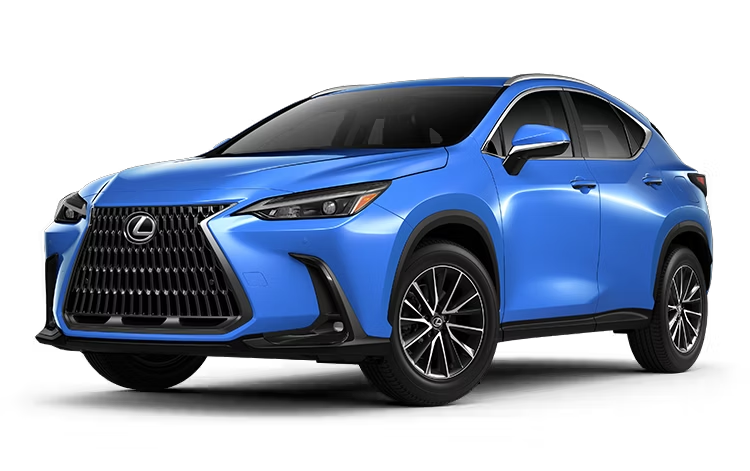
Lexus IS VIN Codes
1. Manufacturer & Region
JTH – Lexus IS, built in Japan by Toyota Motor Corporation.
2. Model, Drivetrain & Trim Levels
The 4th–8th digits specify body type, drivetrain, and trim:
30 Series (2WD) | 36 Series (AWD) | 37 Series (AWD)
Trim Levels:
Base (U)
Comfort (C)
Premium (D)
Special Edition (4)
F Sport (G)
F Sport Handling (S)
3. Engine & Safety Features
Engines:
5.0L V8 (472HP) – 2UR-GSE
3.5L V6 (311HP) – 2GR-FKS
3.5L V6 (260HP) – 2GR-FKS
2.0L Turbo (241HP) – 8AR-FTS
Safety Features:
Seat belts: All seats
Airbags: Frontal (Driver/Passenger), Curtain (1st & 2nd Rows), Side (1st & 2nd Rows), Knee (Driver/Passenger)
4. Manufacturing Plant & Model Year
Plant: Tahara Plant, Toyota Motor Corp. (Code: 5)
Model Year: 2022 (Code: N)
Lexus LX VIN Codes
1. Manufacturer & Region
JTJ – Lexus LX, built in Japan by Toyota Motor Corporation.
2. Model, Drivetrain & Trim Levels
The 4th–8th digits indicate body type, drivetrain, and trim:
Model: URJ201L (Four-Wheel Drive)
Trim Levels:
2R Base (D)
2R Luxury (E)
3R Base (C)
3R Luxury (F)
3. Engine & Safety Features
Engine:
5.7L V8 (383HP) – 3UR-FE
Gross Vehicle Weight Rating (GVWR): Class F (7,001-8,000 lbs)
Safety Features:
Seat belts: All seats
Airbags: Frontal (Driver/Passenger), Curtain (All Rows), Side (1st & 2nd Rows), Knee (Driver/Passenger)
4. Manufacturing Plant & Model Year
Plant:
Yoshiwara Plant, Toyota Auto Body Corp. (Code: Y)
Tahara Plant, Toyota Motor Corp. (Code: 5)
Model Year: Indicated in the 10th digit of the VIN

Lexus ES VIN Codes
1. Manufacturer & Region
JTH – Lexus ES, built in Japan by Toyota Motor Corporation
58A – Lexus ES, built in USA by Toyota Motor Manufacturing, Kentucky, Inc.
2. Model, Drivetrain & Trim Levels
The 4th–8th digits specify body type, trim, and drivetrain:
Models:
GSZ10L – Two-Wheel Drive (Gasoline)
AXZH10L – Two-Wheel Drive (Hybrid)
Trim Levels:
Base (F)
Premium (E)
Luxury (G)
Ultra Luxury (D)
F Sport (B)
3. Engine & Safety Features
Engines:
3.5L V6 (301HP) – 2GR-FKS (Gasoline)
2.5L L4 (176HP) – A25A-FXS (Hybrid)
Safety Features:
Seat belts: All seats
Airbags: Frontal (Driver/Passenger), Curtain (All Rows), Side (All Rows), Knee (Driver/Passenger)
4. Manufacturing Plant & Model Year
Plants:
Toyota Motor Manufacturing, Kentucky, Inc. (Code: U)
Tsutsumi Plant, Toyota Motor Corp. (Code: 3)
Toyota Motor Kyushu, Inc. (Code: D)
Model Year: Indicated in the 10th digit of the VIN

Lexus VIN Locations

Where To Find The VIN On A Lexus ES
(1989–Present)
- Dashboard: Visible at the lower-left corner of the windshield, seen from outside.
- Driver’s Side Door Frame: Located on the B-pillar when the door is open.
- Engine Bay: Stamped on the firewall or front strut tower.
- Paperwork: Found in registration, insurance documents, and service records.
Where To Find The VIN On A Lexus GS
(1991–2020)
- Dashboard: Located at the base of the windshield, driver’s side.
- Driver’s Side Door Frame: Inside the door jamb, printed on the factory label.
- Engine Bay: Stamped on the firewall or radiator support.
- Paperwork: Included in title, registration, and warranty documents.
Where To Find The VIN On A Lexus IS
(1999–Present)
- Dashboard: Clearly displayed at the lower-left windshield corner.
- Driver’s Side Door Frame: Found inside the B-pillar, near the latch.
- Engine Bay: Stamped on the chassis near the firewall or front strut tower.
- Paperwork: Located in ownership documents, registration, and service booklets.
Where To Find The VIN On A Lexus LS
(1989–Present)
- Dashboard: Easily spotted through the windshield on the driver’s side.
- Driver’s Side Door Frame: Inside the door jamb, on a compliance label.
- Engine Bay: Stamped on the firewall or front chassis crossmember.
- Chassis Frame: Older models may have it engraved on the front subframe.
- Paperwork: Listed in title records, insurance, and warranty papers.
Where To Find The VIN On A Lexus RX
(1998–Present)
- Dashboard: Located at the lower-left windshield corner, visible from outside.
- Driver’s Side Door Frame: Inside the B-pillar, printed on the manufacturer label.
- Engine Bay: Stamped on the firewall or chassis near the radiator support.
- Paperwork: Found in registration, insurance policy, and manufacturer warranty.
Where To Find The VIN On A Lexus NX
(2014–Present)
- Dashboard: Clearly visible through the windshield’s lower-left side.
- Driver’s Side Door Frame: Inside the B-pillar, printed on the VIN plate.
- Engine Bay: Stamped on the firewall or radiator support.
- Paperwork: Recorded in title, service history, and registration papers.
Where To Find The VIN On A Lexus GX
(2002–Present)
- Dashboard: Found at the base of the windshield, driver’s side.
- Driver’s Side Door Frame: Inside the door jamb, printed on a factory sticker.
- Engine Bay: Stamped on the firewall or front chassis rail.
- Chassis Frame: Older models may have it engraved on the rear chassis crossmember.
- Paperwork: Listed in registration, insurance, and warranty booklets.
Where To Find The VIN On A Lexus LX
(1996–Present)
- Dashboard: Clearly displayed at the lower-left windshield corner.
- Driver’s Side Door Frame: Found inside the door jamb, near the latch.
- Engine Bay: Stamped on the firewall or chassis subframe.
- Chassis Frame: Engraved on the rear chassis rail for off-road identification.
- Paperwork: Located in title documents, registration, and service history.
Where To Find The VIN On A Lexus RC (2015–Present)
- Dashboard: Visible through the driver’s side windshield, near the lower-left corner.
- Driver’s Side Door Frame: Inside the B-pillar, on the compliance label.
- Engine Bay: Stamped on the firewall or front strut tower.
- Paperwork: Documented in registration, insurance, and warranty records.
Lexus VIN Decoder - All Codes
Country of Origin
| Code | Country |
|---|---|
| J | Japan |
| 5 | USA |
Manufacturer
| Code | Manufacturer |
|---|---|
| JTH | Lexus (Passenger Cars, Japan) |
| JTJ | Lexus (SUVs, Japan) |
| 58A | Lexus (USA) |
Model Line and Years
| Model | Years |
|---|---|
| LS | 1989–present |
| ES | 1989–present |
| IS | 1999–present |
| GS | 1991–2020 |
| RC | 2014–present |
| LC | 2017–present |
| LX | 1996–present |
| GX | 2002–present |
| RX | 1998–present |
| NX | 2014–present |
| UX | 2018–present |
Manufacturing Plant
| Code | Plant |
|---|---|
| T | Tahara, Japan |
| K | Kyushu, Japan |
| M | Motomachi, Japan |
| C | Cambridge, Ontario, Canada |
How To Decode a Lexus VIN
Example VIN: JTJBM7FX7J5097534
Breakdown of the Lexus VIN:
- 1st Character: “J”
Country of Origin: Japan
- 2nd Character: “T”
Manufacturer: Toyota Motor Corporation (Lexus is a division of Toyota)
- 3rd Character: “J”
Vehicle Type/Division: Lexus division
- Characters 4-8 (VDS): “BM7FX”
This section provides information about the model, engine, body style, and other features.
- “B”: The body type (could indicate an SUV or sedan, depending on the model).
- “M7”: Model-specific information (e.g., RX, NX, or GX model).
- “F”: The engine or trim level, typically indicating the type of engine or special trim.
- “X”: Could refer to the transmission or additional features.
- 9th Character: “7”
Check Digit: This is used to verify the validity of the VIN.
- 10th Character: “J”
Model Year: 2018 (L represents 2020, M for 2021, so J indicates 2018).
- 11th Character: “5”
Plant Code: This refers to the factory where the vehicle was manufactured. In this case, it likely refers to one of Lexus’s plants in Japan.
- Characters 12-17 (VIS): “097534”
Vehicle Identifier Section: The last six characters are a unique production sequence number for this specific Lexus vehicle.
Full VIN Decoding:
JTJBM7FX7J5097534
Manufacturer: Toyota
Model: Lexus
Model Year: 2018
- Vehicle Type: SUV (possible RX model)
Plant: Assembled in Japan
Unique Identifier: Vehicle-specific production number.
How To Interperet Different VIN Characters
First Character – Country of Manufacture
The first character represents where the Lexus was built.
J = Japan (for Lexus)
Second Character – Manufacturer
The second character identifies the manufacturer. For Lexus, this typically indicates Toyota Motor Corporation.
T = Toyota (Lexus is a division of Toyota)
Third Character – Vehicle Type
This character describes the type of vehicle.
J = Lexus (the model division)
Characters 4 to 8 – Vehicle Descriptor Section (VDS)
These five characters give detailed information about the vehicle, including its model, body style, engine, and trim:
Model/Series (Position 4): Often indicates the model family (e.g., RX, LS, ES, etc.).
Body Style/Trim (Position 5): May refer to the number of doors or specific trim level (e.g., Luxury, F Sport).
Trim/Equipment (Position 6): Details the trim level and possible additional equipment. Lexus vehicles may have varying equipment packages, so this reflects some of those options.
Restraint System/GVWR (Position 7): Refers to the safety features and gross vehicle weight rating (GVWR).
Engine Type (Position 8): Identifies the engine type in the Lexus, such as V6, hybrid, or turbocharged engine options (e.g., 3.5L V6, 2.0L Turbo).
Ninth Character – Check Digit
This character is used to verify the authenticity of the VIN, ensuring it’s legitimate.
Tenth Character – Model Year
The tenth character represents the model year of the vehicle. Lexus uses the standard VIN year coding system.
Eleventh Character – Assembly Plant
The eleventh character identifies the assembly plant where the Lexus was manufactured. Lexus has multiple production plants, mainly in Japan.
Characters 12 to 17 – Serial Number
This section includes a unique production number assigned to each vehicle.
Example Lexus VIN Breakdown (Hypothetical):
VIN: JTJYARBZ6J5112345
J = Built in Japan
T = Toyota (Lexus is part of Toyota)
J = Lexus division
Y = Model family (for example, RX, LS, etc.)
A = Body style/trim (might indicate SUV, sedan, etc.)
R = Trim or equipment (could indicate trim level like F Sport, Luxury)
B = Restraint system/GVWR
Z = Engine type (e.g., 3.5L V6)
6 = Check digit
J = Model year (check the year code chart for Lexus model year)
5 = Assembly plant code (specific factory where it was built)
12345 = Unique serial number for the vehicle
This breakdown helps identify specific information about a Lexus, such as its model, year, and production details!
Free Lexus VIN Decoders
Lexus Drivers (Official Website): While not strictly a “decoder,” Lexus’s official driver website often allows you to input your VIN to access owner’s manuals, service history (if available), and sometimes build information. This can be a valuable resource, though it may require creating an account.
NHTSA (National Highway Traffic Safety Administration): The NHTSA website is a good starting point, primarily for checking for safety recalls. It’s not a full VIN decoder in the sense of providing all original vehicle specifications, but it’s crucial for safety-related information.
AutoCheck/Carfax: Similar to each other, both AutoCheck and Carfax offer limited free VIN checks that provide a basic overview. However, their primary goal is to upsell you to their paid services for more comprehensive vehicle history reports. The free checks can be useful for a quick initial look, but don’t expect detailed Lexus-specific information.
Information You Can Get from Free Lexus VIN Decoders
Basic Vehicle Information:
- Year: The model year of the Lexus.
- Make: Lexus, of course.
- Model: The specific Lexus model (e.g., IS, RX, LS, NX, etc.).
- Body Style: (e.g., sedan, SUV, coupe).
- Engine: Sometimes, the engine type is included (e.g., V6, hybrid), but often not the specific engine code.
- Manufacturing Plant: Where the Lexus was assembled.
Potentially Available (But Less Reliable in Free Decoders):
- Trim Level: Free decoders are less consistent in accurately identifying the trim level (e.g., base, F Sport, Luxury). This is a common weakness.
- Transmission: Sometimes included, but not always.
- Original Country of Manufacture: May be provided based on the WMI.
Information Not Typically Available in Free Decoders:
- Factory Options/Packages: Forget about getting details on specific options (e.g., navigation, sunroof, premium sound) or packages. Free decoders rarely provide this level of detail.
- Interior/Exterior Colors: Highly unlikely to be included.
- Detailed Engine Code/Specifications: Free decoders usually don’t give the precise engine code or detailed engine specs.
- Vehicle History: Free decoders generally do not provide accident history, ownership history, or title information. That’s the domain of paid services like Carfax or AutoCheck.
- Service Records: Absolutely not available through free VIN decoders.
- Original MSRP: Not typically provided.
Best Lexus VIN Decoders
- carVertical leads the list. They are known for providing detailed vehicle history reports, including accident records, ownership history, mileage rollbacks, and even photos. Their focus is on transparency and helping buyers avoid hidden problems. They often use blockchain technology to help ensure the integrity of their data.
AutoCheck: A well-established player in the vehicle history report space. AutoCheck provides detailed reports covering accidents, title issues, and other important information. They are often compared with Carfax, and some find their interface more user-friendly.
Carfax: Perhaps the most recognizable name in vehicle history reports. Carfax is known for its extensive database and detailed reports. They are widely used by dealerships and individuals. However, their reports can sometimes be more expensive than other options.
Benefits Of A Using Paid VIN Decoder
Comprehensive Vehicle History: Paid services like carVertical, Carfax, and AutoCheck access significantly more data sources than free decoders. This means they can provide a much more complete picture of a vehicle’s history, including:
- Accident Records: Details about past accidents, including severity and damage.
- Title Issues: Information about salvage titles, flood damage, or other title problems.
- Mileage Verification: Confirmation of mileage and detection of potential rollbacks.
- Ownership History: Number of previous owners and length of ownership.
- Service Records: Some paid services may provide access to service history, though this is not always guaranteed.
- Lien Information: Whether there are any outstanding loans on the vehicle.
Accuracy and Reliability: Paid services invest in data quality and validation, leading to more accurate and reliable information than free decoders, which often rely on less reliable or outdated data.
Detailed Reports: Paid reports are typically much more detailed and organized than the limited information provided by free decoders. This makes it easier to understand the vehicle’s history and identify potential red flags.
Reduced Risk: By providing a more complete picture of a vehicle’s history, paid VIN decoders help reduce the risk of buying a used car with hidden problems. This can save you money and headaches in the long run.
Peace of Mind: Knowing the full history of a vehicle can give you peace of mind and confidence in your purchase decision.
Negotiating Power: A paid VIN report can give you valuable negotiating power when buying a used car. If the report reveals any issues, you can use that information to negotiate a lower price.
Fraud Prevention: Paid VIN decoders can help prevent fraud by verifying the information provided by the seller and identifying potential scams.
Where Do i Find The VIN Number On My Lexus
Driver’s Side Dashboard: The most common location is on the driver’s side dashboard, near the base of the windshield. You should be able to see it clearly from outside the car.
Driver’s Side Doorjamb: Open the driver’s side door and look on the doorjamb, near where the door latches. There’s usually a sticker or plate with the VIN.
Vehicle Registration/Title: Your Lexus’s VIN will also be printed on your vehicle registration documents and your title.
Less Common Locations (May Vary by Model):
Engine Bay: Sometimes, you might find a VIN plate or sticker in the engine bay, usually on the engine block or near the firewall.
Spare Tire Compartment: In some cases, the VIN might be located in the spare tire compartment.
I Can't Find My Lexus VIN
Older Lexus Vehicles (Pre-2000s):
- Doorjamb: The doorjamb (driver’s side) is still a likely place to find the VIN on older Lexus models.
- Firewall: Check the firewall in the engine compartment. Older vehicles sometimes had the VIN stamped or on a metal plate in this area.
- Frame Rail: On some older vehicles, the VIN might be stamped on a frame rail, often in the engine compartment or underneath the car. This can be harder to see and may require some cleaning.
- Title and Registration:
As always, your vehicle’s title and registration documents will have the VIN. This is crucial if you can’t readily find it on the vehicle itself.
Imported Lexus Vehicles (Especially JDM – Japan Domestic Market):
- Right-Hand Side: If the Lexus is a Japanese import (JDM), remember that the steering wheel is on the right. So, the VIN plate on the dashboard will be on the passenger side (left side of the car as you face it).
- Engine Bay: JDM cars might have the VIN plate in the engine bay more prominently than export models. Look on the firewall, strut towers, or other accessible areas.
- Chassis Plate: Some JDM vehicles have a separate chassis plate with more detailed information, including the VIN. This might be in the engine bay or under the hood.
- Documentation is Key: For imported vehicles, the paperwork is extremely important. The import documents and Japanese registration will have the VIN. This is essential for registration in your local jurisdiction.
How Do I Find the VIN in the Lexus app
Open the Lexus app: Launch the Lexus app on your smartphone.
Navigate to Vehicle Details:
- Tap on your vehicle’s nickname at the top of the screen (if you’ve already added your Lexus).
- If you haven’t added your Lexus yet, look for an “Add Vehicle” or similar option.
Use the VIN Scanner:
- Tap the “+” button (usually in the corner) to add a vehicle or access the VIN scanning option.
- The app will request access to your phone’s camera. Grant permission.
- Point your phone’s camera at the VIN barcode (if available) or the VIN itself (usually found on the driver’s side dashboard near the windshield).
- The app should automatically detect and read the VIN.
Manual Entry (if needed): If the scanner doesn’t work, you’ll likely have the option to manually enter the 17-character VIN.
- App Version: Make sure you have the latest version of the Lexus app installed.
- Account: You may need to have a Lexus account and be logged in to use the app’s features.
- VIN Location: The VIN is typically found on the driver’s side dashboard (viewable through the windshield) or on the driver’s side doorjamb.
Discover the value of your cars options and specification!
- Select from thousands of vehicles and options
- See how each option adds value to your car
- Discover which tech features add a premium
- Spot which options hold their value over time
- Find out if that 'Sport' package pays off later
- Identify high value features others miss
$355 $354 $353 $352 $351 $350
How to Check for Lexus Recalls by VIN: A Step by Step Guide
1. Locate Your VIN:
- Your VIN (Vehicle Identification Number) is a unique 17-character code that identifies your Lexus.
- You can find it in a few places:
- Driver’s side dashboard: Look at the base of the windshield on the driver’s side.
- Driver’s side doorjamb: Open the driver’s door and check the sticker on the doorjamb.
- Vehicle registration/title: Your VIN is also printed on your registration and title documents.
2. Choose a Recall Check Tool:
NHTSA (National Highway Traffic Safety Administration):
- Visit the NHTSA website: www.nhtsa.gov/recalls
- Enter your VIN in the “Recalls Lookup by VIN” tool.
- NHTSA’s site is a reliable source for safety recall information.
Lexus Website:
- Go to the Lexus website and look for a “Recall Lookup” or “Safety Recall” section.
- Enter your VIN to check for any open recalls specific to your Lexus model.
RepairPal:
- RepairPal offers a recall check tool: repairpal.com/lexus/recalls
- Enter your VIN or license plate number to see if any recalls affect your Lexus.
3. Enter Your VIN:
- Carefully enter the 17-character VIN into the chosen recall check tool.
- Double-check for any typos or errors before submitting.
4. Review the Results:
- The tool will search its database for any open recalls associated with your VIN.
- If there are recalls, the results will provide details about the issue and the necessary repairs.
5. Contact a Lexus Dealership:
- If you find any open recalls, contact your local Lexus dealership as soon as possible to schedule a free repair.
- Provide them with your VIN and the recall information you found.
Useful Resources For Checking A Lexus Recall
Official Sources:
Lexus Drivers (Official Website): This is your primary source for Lexus-specific recall information. You can often enter your VIN to see if there are any outstanding recalls for your vehicle. It’s a good idea to create an account on the Lexus Drivers site to manage your vehicle information drivers.lexus.com (Look for a “Recall” or “Safety Recall” section)
NHTSA (National Highway Traffic Safety Administration): The NHTSA website is a reliable source for safety recall information for all vehicles, including Lexus. You can enter your VIN to check for any open recalls. www.nhtsa.gov/recalls
Other Helpful Resources:
RepairPal: RepairPal provides a recall check tool that allows you to enter your VIN or license plate number to see if any recalls affect your Lexus.
Carfax: While Carfax is primarily known for vehicle history reports, they also have a free recall check tool.
AutoCheck: Similar to Carfax, AutoCheck offers a free recall check tool in addition to their vehicle history reports.
Tips for Using These Resources:
- Have your VIN ready: You’ll need your 17-character Vehicle Identification Number (VIN) to check for recalls.
- Check regularly: New recalls can be issued at any time, so it’s a good idea to check these resources periodically.
- Contact your dealer: If you find any open recalls, contact your local Lexus dealership to schedule a free repair.
Lexus Forums and Communities
Top Lexus Forums:
ClubLexus: This is one of the largest and most comprehensive Lexus forums online. It covers a wide range of topics, from specific model discussions to general car care and maintenance. You’ll find active discussions, technical advice, and a welcoming community of Lexus enthusiasts.
Lexus Owners Club: Another well-established forum with a strong focus on the UK market, but with members from all over the world. It provides a platform for owners to share experiences, ask questions, and discuss all things Lexus.
My.IS Forum: If you’re a fan of the Lexus IS model, this is the forum for you. It’s dedicated to the IS series and offers in-depth discussions about performance, modifications, and maintenance specific to this model.
Other Notable Communities:
Reddit: There are several Lexus-related subreddits on Reddit, such as r/Lexus, where you can find news, discussions, and owner experiences.
Facebook Groups: Search for “Lexus owners” or specific Lexus model groups on Facebook to connect with other owners in your area or with similar interests.
Common Lexus Recalls To Be Aware Of
1. Airbag Issues:
- Occupant Classification System (OCS) Sensor: Problems with the OCS sensor can prevent the front passenger airbag from deploying properly in a crash. This is a recurring issue across various brands, including Lexus.
- Airbag Inflators: Certain airbag inflators can degrade over time, potentially rupturing and sending metal fragments into the cabin. This is a widespread recall affecting many automakers.
- Driver’s Airbag: Issues with the spiral cable assembly in the steering column can deactivate the driver’s airbag.
2. Engine Problems:
- Engine Stalling: Some Lexus models have experienced engine stalling due to debris from the manufacturing process contaminating the engine.
- Fuel Pump Failure: Fuel pump failures can cause the engine to stall, increasing the risk of a crash.
3. Electrical System Issues:
- Rearview Camera: Problems with the rearview camera software can cause the image to be delayed or not display at all.
- Steering Column: Issues with the electrical connection in the steering column can affect the driver’s airbag and other systems.
4. Other Potential Issues:
- Head Restraints: In some cases, head restraints may be inadvertently removed without pressing the release button, which is a safety concern.
- Software Glitches: Modern vehicles rely heavily on software, and glitches can sometimes lead to recalls for various issues.
Lexus Warranty Check by VIN: How to Find Your Coverage
Official Lexus Warranty Information
Go to the Lexus website: Visit the official Lexus website at www.lexus.com.
Navigate to the “Owners” section: Look for a tab or link that says “Owners,” “My Lexus,” or something similar. This section is dedicated to current Lexus owners.
Find “Service & Warranty”: Within the “Owners” section, you should find a link or tab related to “Service & Warranty,” “Maintenance,” or “Warranty & Recalls.” Click on it.
Access Warranty Information: On the “Service & Warranty” page, you should find detailed information about the Lexus warranty coverage. This will typically include:
- Basic Warranty: Coverage period and what it covers.
- Powertrain Warranty: Coverage period and the specific components included.
- Hybrid Warranty: Coverage details for hybrid models.
- Other Warranties: Information on any additional warranties, such as corrosion perforation warranty or parts warranty.
- Exclusions: A list of situations or components that are not covered by the warranty.
Direct Link:
- You can often find the warranty information by searching “Lexus warranty” on the Lexus website or by using a direct link like this:
What Is Included In A Lexus Warranty?
- Basic Warranty (New Vehicle Limited Warranty): This covers defects in materials and workmanship for most components of your Lexus.
- Typical Coverage: 4 years/50,000 miles (whichever comes first).
- Powertrain Warranty: This covers the essential components of the engine, transmission, and drivetrain.
- Typical Coverage: 6 years/70,000 miles (whichever comes first)
- Hybrid Component Warranty (for Hybrid Models): This covers hybrid-specific components like the hybrid battery, control module, and inverter.
- Typical Coverage: 8 years/100,000 miles (whichever comes first) – This can vary, so double-check for your specific hybrid model.
- Corrosion Perforation Warranty: This protects against rust-through (perforation) of body panels.
- Typical Coverage: 6 years/unlimited mileage.
- Restraint Systems Warranty: Covers components of the airbag system.
- Typical Coverage: 6 years/60,000 miles
- Emissions Warranty: Covers emissions-related components as required by federal regulations. This often varies depending on the specific component.
What’s Typically Not Covered:
- Normal Wear and Tear: Items like brake pads, tires, wiper blades, and filters are considered wear items and are not covered by the warranty.
- Maintenance: Routine maintenance services (oil changes, fluid flushes, etc.) are generally the owner’s responsibility, although Lexus often includes some complimentary maintenance for a certain period.
- Damage from External Causes: Damage due to accidents, collisions, environmental factors (hail, floods), or misuse is not covered.
- Modifications: Aftermarket modifications or alterations can void the warranty.
What Do I Do If My lexus Warranty Has Expired
1. Continue with Routine Maintenance: Even though the warranty has expired, it’s crucial to continue following the recommended maintenance schedule outlined in your owner’s manual. Regular maintenance is the best way to prevent costly repairs down the road and keep your Lexus running smoothly. This includes oil changes, fluid checks, brake inspections, tire rotations, and other scheduled services.
2. Consider an Extended Warranty: Before your factory warranty expires (or shortly after), you can purchase an extended warranty (also known as a vehicle service contract). This provides coverage for certain repairs beyond the original warranty period.
- Lexus Extended Warranty: Lexus offers its own extended warranty plans, which are often the most comprehensive and seamlessly integrated with your vehicle.
- Third-Party Extended Warranties: Many independent companies offer extended warranties. Research these carefully, as coverage and claim processes can vary significantly.
Things to consider with extended warranties:
- Cost: Extended warranties can be expensive, so weigh the cost against the potential cost of repairs.
- Coverage: Carefully review what is and isn’t covered by the extended warranty. Pay attention to exclusions and limitations.
- Deductible: Understand the deductible you’ll have to pay for each repair.
- Claim Process: How easy is it to file a claim? Are there restrictions on where you can get your car repaired?
- Reputation of the Provider: Research the company offering the extended warranty to ensure they are reputable and financially stable.
3. Budget for Potential Repairs: If you choose not to purchase an extended warranty, it’s wise to set aside money in a dedicated savings account for potential repairs. Unexpected repairs are part of vehicle ownership, especially as cars age.
4. Find a Trusted Mechanic: Develop a relationship with a reliable and trustworthy mechanic who is experienced with Lexus vehicles. A good mechanic can help you maintain your car, diagnose problems accurately, and perform repairs at a fair price. Online reviews and recommendations from other Lexus owners can be helpful.
5. DIY (If Applicable): For some basic maintenance tasks (like changing air filters or wiper blades), you might be able to do it yourself if you’re comfortable with basic car maintenance. There are many online resources and tutorials available. However, for more complex repairs, it’s best to leave it to the professionals.
Lexus Budget for Repairs and Maintenance
1. Routine Maintenance:
- Frequency: Lexus recommends service intervals, typically every 5,000 miles or 6 months (whichever comes first). This can vary slightly by model, so refer to your owner’s manual.
- Cost per service: Expect to pay anywhere from $100 to $300 for a basic service, including oil change, filter replacement, and inspections. More extensive services (like fluid flushes or tire rotations) will cost more.
- Annual cost: On average, you might spend $200 to $600 per year on routine maintenance.
2. Major Services:
- Frequency: Every 30,000 miles or 2-3 years, you’ll need more extensive services, including:
- Fluid flushes (transmission, brake, coolant)
- Spark plug replacement
- Inspection of belts, hoses, and other components
- Cost: These services can range from $500 to $1,000 or more, depending on the specific services required.
3. Potential Repairs:
- Reliability: Lexus’ are generally reliable, but repairs are still possible.
- Common repairs: Some common repairs include:
- Brake work (pads, rotors)
- Tire replacements
- Battery replacement
- Suspension components
- Minor electrical issues

Article By: Dale Ogden
Dale is a highly respected automotive industry expert, renowned for his pioneering work in vehicle forecasting and asset management. As the founder of Check Your Spec and former Forecast Manager at CAP HPI (the UK equivalent of Kelley Blue Book), he spearheaded the development of forecasting strategies and depreciation models for internal combustion, hybrid, and electric commercial vehicles. With over two decades of experience, Dale pioneered EV forecasting models now used by major manufacturers, and has generated residual values for over 10,000 new vehicles.
Lexus VIN Decoder FAQ
Will a free Lexus VIN decoder give me all the information I need?
Free Lexus VIN decoders are helpful for a general overview, but they typically have limitations. They might tell you the model and engine, but often fall short on details like trim level, factory options, and specific interior/exterior colors. Don’t expect a free decoder to reveal everything.
Where can I find the most accurate Lexus VIN decoding information?
The most reliable source is your local Lexus dealership. They have access to Lexus’s internal databases. While online decoders can be helpful, they may not be as accurate or complete.
Can a Lexus VIN decoder tell me if my Lexus was imported (e.g., JDM)?
The World Manufacturer Identifier (WMI) portion of the VIN can sometimes provide clues about the vehicle’s origin. However, a VIN decoder alone might not definitively tell you if it’s a JDM import. You’ll likely need to cross-reference with import documents and other resources for confirmation.
My Lexus is a hybrid. Will the VIN decoder tell me about the hybrid components?
A Lexus-specific decoder might indicate that it’s a hybrid, but it likely won’t give you detailed information about the hybrid battery health, specific hybrid components, or other hybrid-related details. For that, you’ll need to consult your Lexus dealer or a hybrid specialist.



Unlock accurate valuations for your car’s features in seconds – find out what your options are worth today and in the future.